Mechanics Behind Combining Offers for Accumulators in Soccer, Horse Racing, and Esports on Smartphone Platforms
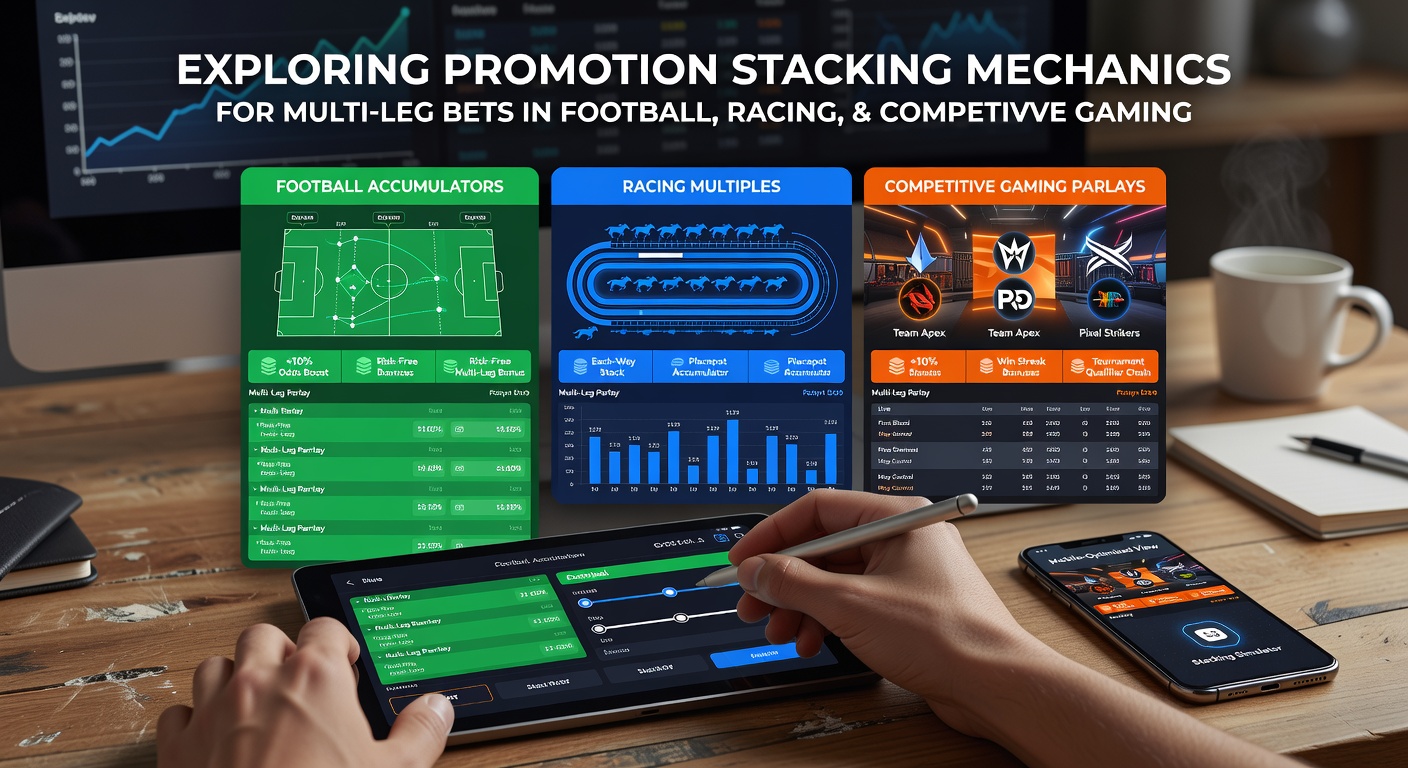
Operators structure promotion stacking by sequencing welcome bonuses, free bet credits, and cashback tiers so that each applies to separate legs within a single accumulator ticket, and this approach extends across soccer fixtures, thoroughbred meetings, and esports tournaments when users access platforms through handheld devices. Data from industry trackers in June 2026 showed mobile sessions accounting for 68 percent of all multi-leg activity in these three verticals, with layered incentives contributing measurable uplift in handle volume during that period.
Football accumulators typically combine match result selections across domestic leagues, and platforms permit a sign-up bonus to cover the first leg while a separate deposit match applies to subsequent additions provided the total stake meets minimum thresholds. Observers note that racing sequences follow a parallel pattern where each-way terms on steeplechase events can absorb refund offers on placed horses, leaving the win portion eligible for an independent cashback credit. Competitive gaming parlays mirror these structures because esports matches generate rapid outcomes that fit within short promotion windows, allowing users to chain no-sweat refunds across multiple titles on the same afternoon.
Core Stacking Rules Across Verticals
Most handheld applications enforce distinct eligibility windows, so a welcome bonus triggered on account registration remains active for 30 days while cashback cycles reset weekly. Researchers at the Australian Institute of Family Studies documented that 42 percent of surveyed mobile bettors in 2025 combined at least two distinct promotions on a single multi-leg ticket, with soccer chains showing the highest frequency because fixture lists supply abundant selection options. Racing operators often restrict stacking when place terms exceed standard fractions, whereas esports books apply fewer exclusions since match durations allow faster turnover and repeated bonus activation.
Users must satisfy separate minimum odds requirements for each layer, and applications automatically segregate qualifying stakes so that one promotion does not cannibalize another. This separation occurs through backend tagging that assigns unique identifiers to each leg at ticket construction, and those identifiers determine which incentive calculates against which portion of the return.
Mobile Interface Features That Enable Layering
Smartphone apps display real-time eligibility banners directly above the bet slip, and these banners update when additional legs push the accumulator into new promotion brackets. Gesture-based selection allows rapid addition of football results or esports maps without exiting the promotions panel, while racing forms load in a secondary pane that preserves bonus balances. Data indicates that sessions lasting under four minutes produced the highest stacking success rates because users could verify all active offers before committing funds.
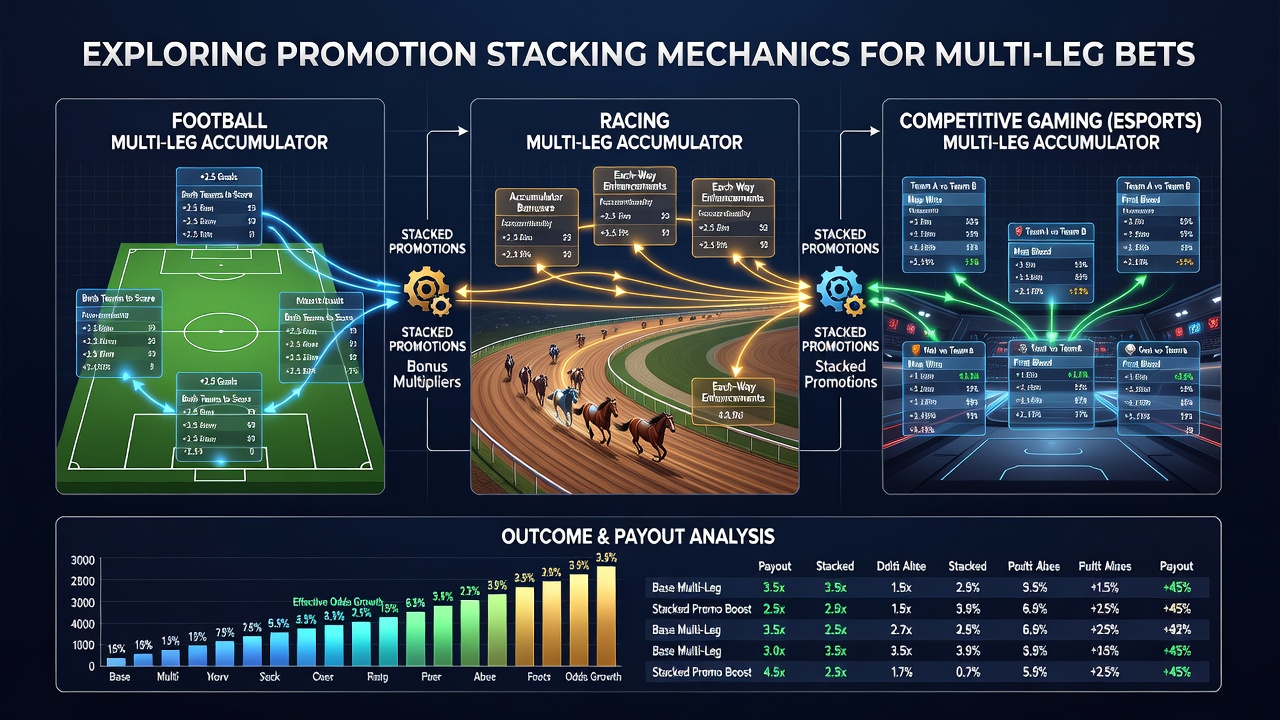
Push notifications alert account holders when a cashback window opens or when a free bet nears expiration, and these alerts include direct links that pre-populate the bet slip with previously selected legs. Such features reduce friction during multi-leg construction, particularly when users move between soccer, racing, and gaming markets within one session. Applications also surface combined payout projections that factor every active promotion, giving immediate visibility into net returns once all legs settle.
Regulatory Context and Compliance Patterns
Authorities in multiple jurisdictions require clear disclosure of stacking conditions, and operators embed these disclosures within the same mobile flow that constructs accumulators. A 2025 report issued by the National Council on Problem Gambling examined 1.2 million mobile sessions and found that transparent bonus layering reduced dispute rates by 19 percent compared with earlier periods when terms remained buried in separate menus. European regulators similarly track cross-vertical stacking to ensure that racing refunds and esports refunds do not overlap on identical stakes, and this oversight extends to June 2026 updates that refined disclosure standards for handheld interfaces.
Operators maintain audit logs that record which promotion applied to which leg, and these logs become accessible to users through account history screens on mobile devices. The logs help verify that no single stake received duplicate credits, preserving compliance while still permitting legitimate combinations across football, racing, and competitive gaming markets.
Practical Examples of Layered Tickets
One documented pattern involves a five-leg soccer accumulator that absorbs a 100 percent deposit match on the opening two fixtures and routes the remaining three legs through a free bet token earned from prior activity. Racing equivalents often pair a each-way double on National Hunt cards with a cashback offer that refunds losing stakes up to a fixed cap, leaving the placed portion to generate returns under separate accumulator terms. Esports users have constructed three-map Valorant parlays where an initial no-sweat refund covers the first map while a loyalty multiplier applies to the final two maps once the ticket reaches settlement.
These examples illustrate how backend tagging and mobile interface design together support stacking without violating individual promotion rules, and the same logic extends to hybrid tickets that mix one football leg with two racing selections and an esports map when operators permit cross-market accumulators.
Conclusion
Promotion stacking for multi-leg bets operates through sequential eligibility windows, backend leg tagging, and mobile interface elements that surface active offers at the point of ticket construction. Football, racing, and esports each present distinct selection densities and outcome speeds, yet the underlying mechanics remain consistent across handheld platforms. Figures from June 2026 confirm continued growth in mobile multi-leg volume alongside these layered incentives, while regulatory frameworks in several regions continue to shape disclosure standards that keep stacking transparent for users.